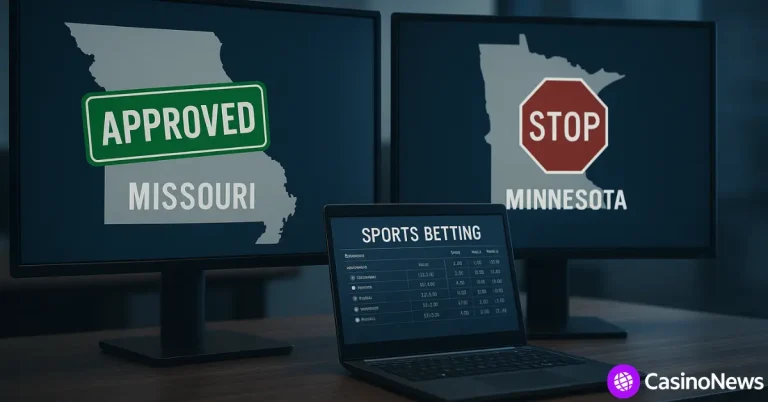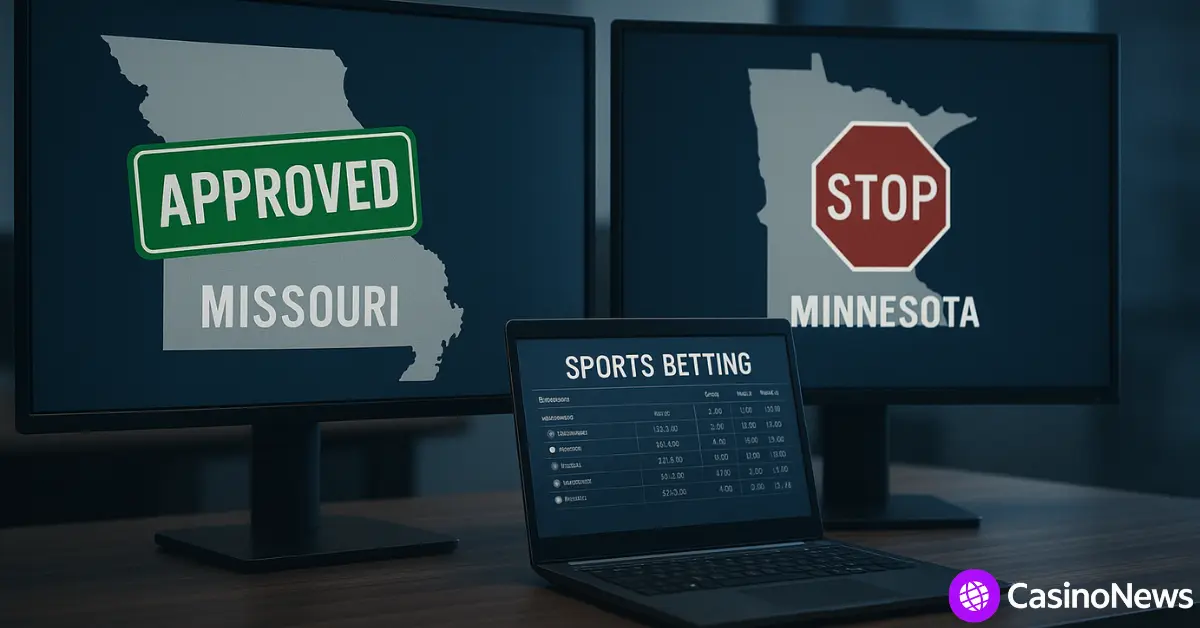
Missouri will launch legal sports betting on 1 December, while Minnesota is intensifying enforcement against offshore gambling sites. The two states now represent opposite ends of the national betting debate: one embracing regulation and tax revenue, the other doubling down on consumer protection and illegal-market crackdowns.
Missouri prepares for a fast December rollout
Missouri’s sports betting market goes live at midnight on 1 December 2025, according to the Missouri Gaming Commission (MGC). Both mobile apps and retail sportsbooks will launch simultaneously, following voter approval of Amendment 2 in 2024. The amendment allows betting for adults 21+ within state lines and applies a ten percent tax on sportsbook revenue, which will be dedicated to education and responsible gambling programs.
The MGC moved quickly through rulemaking, licensing and technical certification. Core regulations were finalized in spring, applications opened in May and temporary approvals followed over the summer. The commission must have operators live by 1 December under the constitutional requirement, according to MGC public filings.
Major brands including DraftKings, FanDuel, BetMGM, Caesars, Fanatics and bet365 have secured provisional approval and market access deals with Missouri casinos and sports franchises. Pre registration opened on 17 November, allowing residents to complete ID checks and claim early bonuses. Missouri also bans wagering on high school sports and restricts certain state college prop bets.
Federal pressure on offshore operators
Even as Missouri embraces regulated betting, officials warn that offshore competition remains a threat. In August, Attorney General Andrew Bailey joined forty-nine other attorneys general in urging the United States Department of Justice (DOJ) to crack down on what they estimate is a four hundred billion dollar illegal gambling market.
Bailey stresses that foreign operators undermine consumer protections and siphon tax revenue from state regulated markets. Missouri’s strategy leans on federal intervention for offshore enforcement while building a fully regulated system inside its own state borders.
Minnesota intensifies its offshore crackdown
In contrast, Minnesota has not legalised online sports betting and legislative efforts continue to stall. With no regulated market in place, the state is focusing on restricting offshore operators serving its residents.
In August 2025, the Minnesota Department of Public Safety (DPS) issued a consumer advisory warning that online casinos, offshore sportsbooks and sweepstakes platforms are all illegal. Regulators highlighted risks such as lack of age checks, no recourse in disputes and limited protection for vulnerable players.
In October, regulators contacted over twenty offshore companies, urging them to exit the state or risk future licensing eligibility. On 5 November, Attorney General Keith Ellison escalated the effort with formal notices to fourteen operators including Bovada, BetOnline and MyBookie. Ellison argues these platforms misrepresent their legal status and that using sweepstakes models do not make their casino games legal.
The crackdown is coordinated with the DPS Alcohol and Gambling Enforcement Division, which previously warned the same operators about potential criminal violations.
A stalled legalization debate in Minnesota
Minnesota lawmakers continue to disagree on key elements of a potential sports betting bill. The core sticking point remains tribal exclusivity versus opening the market to commercial operators. Until that dispute is resolved, Minnesota remains a prohibition state.
This political limbo has placed an additional weight on the state’s enforcement methods. Officials say they cannot allow offshore operators to build market share while lawmakers debate regulatory models.
Critics argue that bettors who want to wager are already crossing into Iowa or using offshore platforms that the state cannot effectively block. That dynamic fuels the argument that legalization may be the only sustainable long term solution.
Two states, one underlying challenge
The regulatory divide between Missouri and Minnesota reflects two competing philosophies shaping the future of US sports betting.
Missouri’s model: regulate and redirect
Missouri believes a strong legal market will naturally pull bettors away from offshore platforms. Legal operators offer tax contributions, compliance checks and responsible gambling tools that illegal sites cannot match.
Minnesota’s model: enforce existing laws
Minnesota views prohibition and enforcement as necessary to protect the integrity of tribal gaming and safeguard consumers from predatory offshore behavior. The state is targeting illegal operators first and leaving regulatory debate to the legislature.
The shared concern
Both states conclude that offshore gambling is a growing national issue and that state level enforcement alone is insufficient. Missouri has requested federal action. Minnesota’s crackdown signals that it would welcome the same.
Impact on consumers and operators
For Missouri bettors, the shift will be immediate. The launch brings legal mobile apps, transparent odds, mandated protections and the ability to self-exclude through state systems.
For Minnesota residents, the message is the opposite. State officials are telling players to stay away from offshore platforms entirely and warning that operators claiming to be legal are misleading users.
Operators are watching both states closely. Missouri offers a valuable new market where major brands can compete openly. Minnesota signals that operating unlicensed sites will have consequences, including potential disqualification from future licensing if the state eventually legalizes online betting.
What to watch next
Missouri’s first month of wagering will be scrutinized for sign-up volume, launch performance and early tax receipts. Regulators will also face questions about enforcement, responsible gambling oversight and how quickly the market scales.
Minnesota’s next steps depend on legislative negotiations. If lawmakers cannot resolve tribal exclusivity disputes, Minnesota may continue relying on enforcement alone. Ellison’s crackdown has added pressure on lawmakers to decide whether Minnesota remains a prohibition state or moves toward a regulated sports betting model.
At the national level, the two states embody a stark divide within the country’s ideology on gambling. Nearly forty states have legal sports betting, according to public regulatory records, yet offshore platforms remain accessible through credit wagering, higher limits and sweepstakes structures. Until federal agencies intervene more aggressively, states will continue adopting divergent solutions.
Together, Missouri and Minnesota show how the next phase of US sports betting will be defined not only by who legalizes, but by how aggressively states confront the offshore market.
Sources
Missouri Gaming Commission: Sports Wagering Updates – https://www.mgc.dps.mo.gov/
Missouri Secretary of State: Amendment 2 – https://www.sos.mo.gov/elections/petitions/2024BallotMeasures
Missouri Attorney General: Offshore Gambling Enforcement – https://ago.mo.gov/attorney-general-bailey-calls-on-doj-to-crackdown-on-400-billion-illegal-offshore-gambling-industry/
Minnesota DPS Consumer Advisory: https://dps.mn.gov/news/age/you-choose-gamble-stay-safe-and-legal-avoiding-illegal-online-gaming
Minnesota DPS Social Channels: https://www.facebook.com/MnPublicSafety/
Minnesota enforcement summaries via statements from the Minnesota Attorney General and DPS Alcohol & Gambling Enforcement Division.